

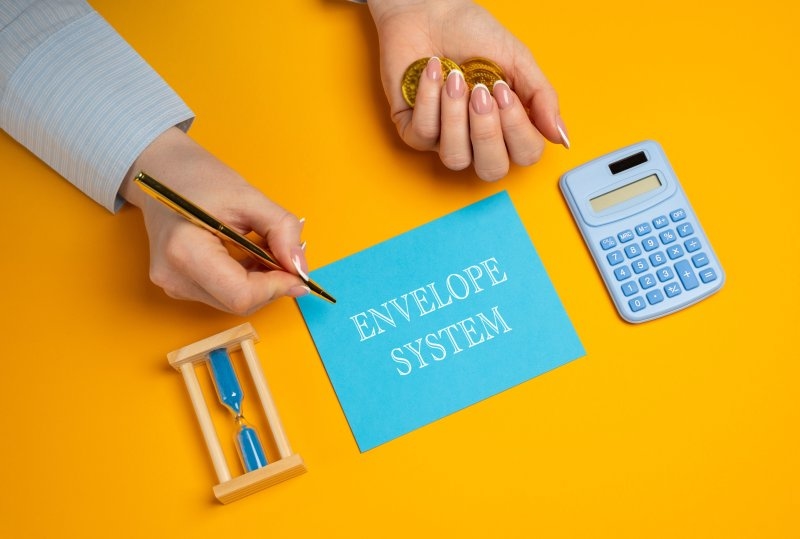
Money management can feel harder than it needs to be, mostly because card taps happen faster than we can mentally track them. Envelope budgeting fixes that by turning vague numbers into something you can actually hold and count. It's not a new idea, but it still works, which is probably why it refuses to go out of style. Here's a look at what envelope budgeting actually is, how the system runs day to day, and where cash stuffing fits into all of it.
Envelope budgeting means splitting your income into categories, groceries, rent, entertainment, whatever applies to you, and putting that exact cash into a labelled envelope for each one. Once an envelope is empty, that's it; spending in that category stops until you refill it. It sounds almost too simple, but that simplicity is exactly why it makes overspending so hard to ignore.
The envelope budgeting system leans on structure rather than pure willpower, which honestly makes it easier to stick with. Every dollar gets assigned a job before you ever spend it, so there's less guesswork at checkout. Three steps keep the whole thing running smoothly month after month.
Before you touch a single envelope, figure out how much of your income should go toward needs, wants, and savings. A lot of people start with the 50-30-20 split, half toward essentials, and the rest divided between lifestyle spending and savings. Getting this part right up front means your envelopes won't run dry halfway through the month.
Break your spending down into categories that actually match your life, not someone else's template. You could keep it broad with one utilities envelope or split it into electric, water, and internet if that feels clearer. Whatever you choose, label it in a way that makes sense the moment you glance at it.
Once an envelope's labelled and filled, that cash only covers its category – no borrowing, no exceptions. Say your coffee envelope starts with forty dollars, and you spend five on a latte; you're left with thirty-five for the rest of the month. That hard limit is what keeps the whole system honest.
If you're still figuring out how to create an envelope budget, it helps to treat it as a short routine rather than a one-time project. Start by listing your income and fixed expenses, then hand every leftover dollar to a labelled envelope. Refill everything on payday, keep an eye on what's left in each one, and adjust categories that keep running short. After a couple of months, it stops feeling like a chore and just becomes how you handle money.
Cash stuffing is really just the envelope system wearing a newer name, one that took off after people started filming themselves organising bills into binders online. The mechanics haven't changed, though; physical cash divided by category still creates a visible ceiling on spending. And because handing over real bills feels a lot more real than tapping a card, people naturally pause before spending it.
The envelope budgeting method offers a few things digital tracking alone tends to miss, especially if you're a visual, hands-on spender.
Even a well-planned envelope budgeting system can fall apart if the categories are too rigid or unrealistic for how you actually live. Forgetting irregular costs, car repairs, annual renewals, that kind of thing is one of the fastest ways to blow through an envelope without warning. Setting up a sinking fund alongside your regular envelopes gives those surprise expenses somewhere to land instead of wrecking your month. It's also worth keeping large cash amounts, especially savings, in an actual bank account rather than an envelope sitting in a drawer.
Not everyone wants to deal with physical bills, and thankfully digital cash stuffing apps copy the same logic without the paper. Spreadsheets, budgeting apps, and bank sub-accounts all let you assign digital dollars to categories, no envelopes required. If you haven't settled on a broader budgeting framework yet, it's worth checking out the 50-30-20 budgeting rule first, since it makes deciding on category amounts a lot less guesswork-heavy.
This method tends to click best with new budgeters, impulsive spenders, and anyone climbing out of debt and trying to rebuild some discipline. If you respond better to a visual limit than to a number on a screen, it's worth trying. But if you live and die by your card and want more flexibility, a hybrid of envelopes plus digital tracking might suit you better.
Definitely, envelope budgeting adapts easily through apps and bank sub-accounts. The core idea, giving limited funds a specific job, still holds up even without physical cash, so it fits modern, card-heavy spending habits just fine.
It really depends on your income and past spending, so there's no one-size answer. Check a few months of bank statements first, then set realistic amounts so envelopes actually last the whole month without constant shortfalls.
Yes, it actually handles irregular income surprisingly well since you adjust envelope amounts based on what came in that month. Fund essentials first, then fill extras as money allows, and the system stays flexible instead of breaking down.
Spending in that category should pause until your next refill. You can borrow from another envelope once in a while, but if it keeps happening, that's a sign the category needs more money next time.
It can work well, with shared envelopes covering joint costs and separate ones for personal spending. A little upfront communication about limits goes a long way toward keeping both people on the same page.
This content was created by AI